Image-Guided Treatment
Abscess Fluid Drainage
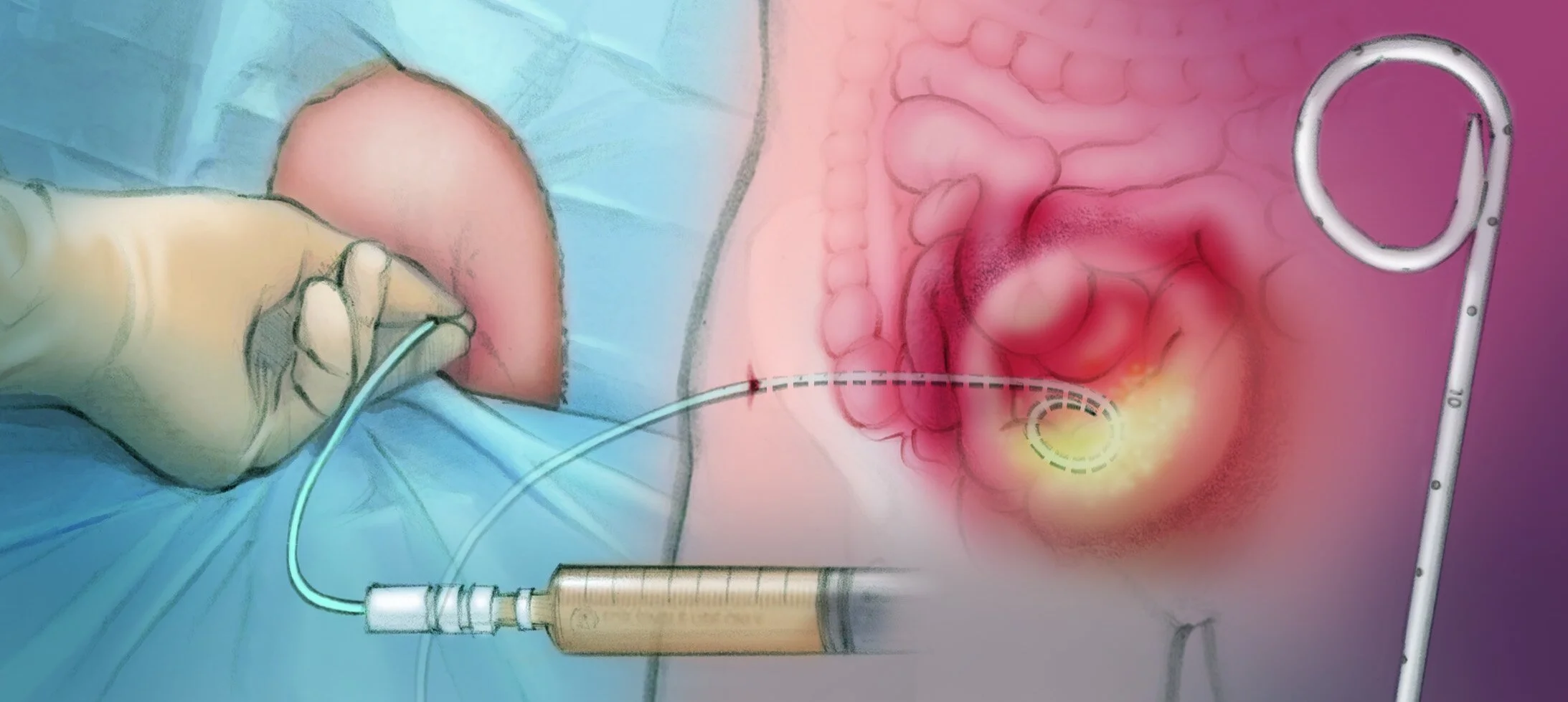
Abscess Fluid Drainage is a minimally invasive image-guided procedure used to remove infected fluid or pus collected within the body. It can help control infection, relieve pressure and discomfort, and support recovery while avoiding the need for a larger surgical incision in appropriately selected patients.
What Is an Abscess?
An abscess is a collection of pus caused by an infection. Abscesses can develop in different parts of the body, including the abdomen, pelvis, liver, kidney, lungs and soft tissues.
Symptoms may include fever, chills, pain, swelling, tenderness and general weakness. Depending on the location and severity, an abscess may require drainage along with appropriate antibiotic treatment.
What Is Image-Guided Abscess Drainage?
During percutaneous abscess drainage, an interventional radiologist uses ultrasound or CT imaging to accurately locate the fluid collection and guide a drainage catheter into it.
After local anaesthesia is administered, a small needle is advanced into the abscess. A thin catheter is then positioned within the collection, allowing infected fluid or pus to drain safely. The catheter may remain in place for a period of time to ensure adequate drainage.
The collected fluid may also be sent to a laboratory for testing to identify the infection-causing organism and help guide antibiotic treatment.
When Is Abscess Drainage Recommended?
Image-guided drainage may be considered for accessible abscesses that are unlikely to resolve with antibiotics alone. It may be used for selected abscesses involving:
- Liver
- Abdomen
- Pelvis
- Kidney
- Lung or chest
- Soft tissues
Imaging helps determine the size, location and characteristics of the abscess and assists in selecting the safest drainage approach.
Benefits of Abscess Fluid Drainage
Image-guided drainage is a minimally invasive alternative to open surgical drainage for appropriately selected patients. It generally requires only a small skin puncture and can provide effective removal of infected fluid.
The procedure may help reduce pain and pressure and support control of the underlying infection. However, antibiotics and treatment of the original cause of the abscess may also be necessary.
What to Expect After Drainage?
Patients are monitored after the procedure, and the drainage catheter may remain in place until the collection has adequately resolved. Follow-up imaging and clinical assessment may be required.
Possible complications include bleeding, infection, injury to nearby structures or incomplete drainage.
Expert Image-Guided Drainage
Dr. Avichala Taxak provides specialised image-guided minimally invasive procedures for the diagnosis and treatment of selected fluid collections and abscesses.
If you have been diagnosed with an abscess or an infected fluid collection, timely specialist evaluation can help determine whether percutaneous abscess drainage is appropriate.
Why Choose Expert Care?
Safe and effective abscess drainage requires accurate imaging-based planning, precise catheter placement, and experienced interventional technique. Modern image-guided methods can help specialists drain fluid collections with greater accuracy while minimising impact on surrounding structures.
If you have been diagnosed with an abscess or infected fluid collection, consult an experienced interventional radiologist to determine whether percutaneous drainage is appropriate for you.
Every patient needs an individual assessment.
Abscess fluid drainage may be appropriate for some patients, while another treatment approach may be better for others. A detailed evaluation helps determine the most suitable plan for your condition.