Vascular & Endovascular Treatment
Diabetic Foot Revascularisation
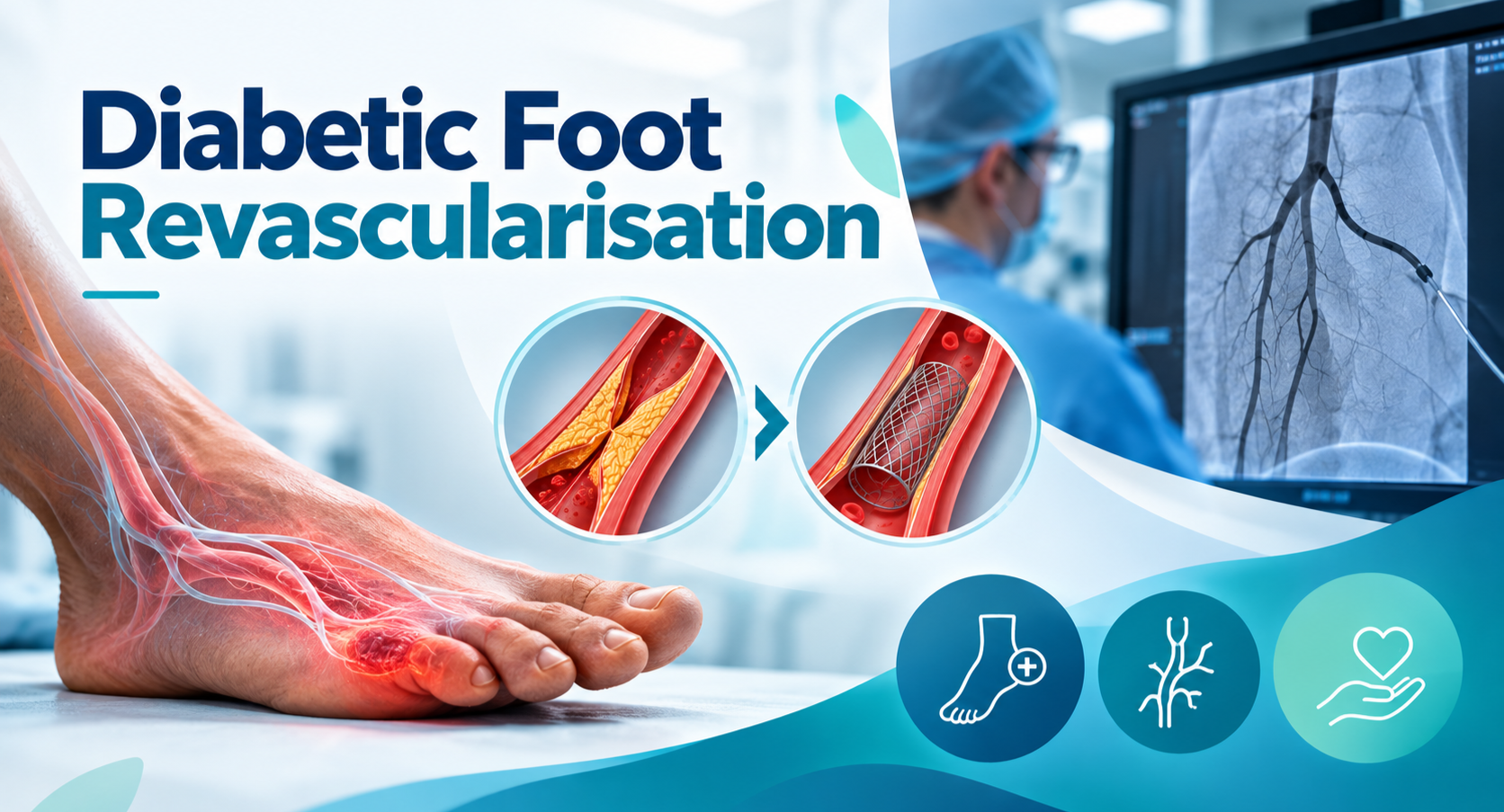
Diabetic Foot Revascularisation is a specialised vascular treatment aimed at improving blood flow to the foot in people with diabetes and peripheral artery disease (PAD). Reduced blood circulation can delay wound healing and increase the risk of infection, tissue damage and, in severe cases, amputation. Revascularisation may help restore blood supply to an ischaemic foot and support wound healing.
What Is Diabetic Foot Revascularisation?
Diabetes can contribute to narrowing or blockage of the arteries supplying the legs and feet. When blood flow becomes inadequate, even a small foot wound or ulcer may be difficult to heal.
Diabetic foot revascularisation aims to restore adequate blood flow through the affected arteries. Depending on the patient's vascular anatomy and clinical condition, treatment may involve angioplasty, stenting or surgical bypass.
When Is Revascularisation Needed?
Revascularisation may be considered in patients with diabetes who have PAD along with a non-healing foot ulcer, gangrene or significant limb ischaemia. A detailed vascular assessment is essential before deciding on treatment.
Common signs that may require vascular evaluation include:
- Non-healing diabetic foot ulcers
- Persistent foot or leg pain
- Cold feet or reduced circulation
- Skin colour changes
- Gangrene or tissue loss
- Slow healing after a foot injury
How Is Diabetic Foot Revascularisation Performed?
The treatment depends on the location and severity of arterial disease. Endovascular procedures may involve balloon angioplasty and stent placement to reopen narrowed or blocked arteries. In selected patients, surgical bypass may be recommended.
Before treatment, vascular imaging such as Doppler ultrasound, CT angiography (CTA), MR angiography (MRA) or catheter angiography may be used to evaluate the arteries.
The goal of revascularisation is to restore blood flow to at least one artery supplying the foot, particularly the area associated with the ulcer when feasible.
Comprehensive Diabetic Foot Care
Revascularisation is only one part of diabetic foot management. Wound care, infection management, diabetes control, pressure relief and regular follow-up may also be required. Current guidelines recommend coordinated care involving appropriate specialists for patients with diabetic foot ulcers and PAD.
Expert Vascular Care
Dr. Avichala Taxak provides specialised evaluation and minimally invasive vascular treatment for patients with diabetic foot circulation problems. A personalised assessment can help determine whether angioplasty, stenting, bypass surgery or another treatment approach is appropriate.
Early evaluation of a non-healing diabetic foot wound can be important for protecting foot health and supporting healing.
Why Choose Expert Care?
Successful diabetic foot revascularisation requires accurate diagnosis, detailed imaging-based planning, and experienced endovascular or surgical technique. Modern catheter-based methods and bypass strategies can help specialists restore blood flow to the foot with greater precision.
If you have a non-healing diabetic foot wound or have been diagnosed with PAD, consult an experienced vascular specialist to determine whether revascularisation is appropriate for you.
Every patient needs an individual assessment.
Diabetic foot revascularisation may be appropriate for some patients, while another treatment may be better for others. A detailed evaluation helps determine the most suitable approach for your condition.