Vascular & Endovascular Treatment
Endovenous Laser Ablation
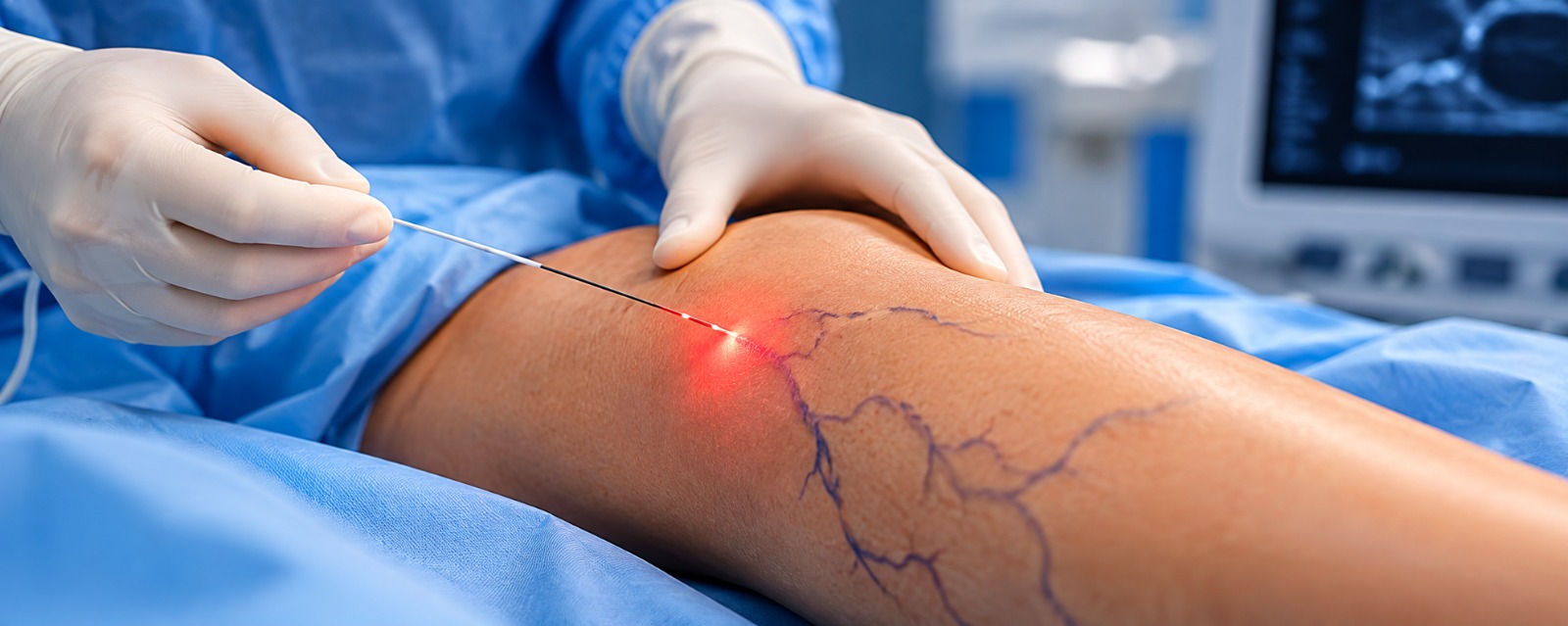
Endovenous Laser Ablation (EVLA) is a minimally invasive treatment for varicose veins caused by faulty or weakened veins. The procedure uses laser energy to close the diseased vein, allowing blood to redirect through healthier veins and helping reduce symptoms and the appearance of varicose veins.
What Is Endovenous Laser Ablation?
Varicose veins commonly develop when valves inside the veins do not work properly, allowing blood to flow backward and collect in the veins. This can cause enlarged, twisted veins and symptoms such as leg pain, heaviness, swelling, itching and discomfort.
During EVLA, a thin laser fibre is inserted into the affected vein under ultrasound guidance. Controlled laser energy heats the vein wall, causing the vein to close. Over time, the treated vein is absorbed by the body and blood is naturally redirected through healthy veins.
Who May Benefit From EVLA?
Endovenous laser ablation may be considered for patients with symptomatic varicose veins or chronic venous insufficiency when treatment is appropriate.
Common symptoms include:
- Aching or pain in the legs
- Leg heaviness or tiredness
- Swelling around the ankles
- Itching or burning around varicose veins
- Visible enlarged or twisted veins
- Skin changes associated with chronic venous disease
A duplex ultrasound is typically used to assess the veins, identify abnormal blood flow and help plan treatment.
How Is Endovenous Laser Ablation Performed?
EVLA is usually performed as an outpatient procedure. After local anaesthesia is given, a small needle is used to access the affected vein. Under ultrasound guidance, a thin laser fibre is advanced into the vein.
The laser delivers controlled thermal energy along the targeted section of the vein, causing it to close. The procedure is performed through a small skin puncture rather than a large surgical incision.
Benefits of Endovenous Laser Ablation
EVLA is a minimally invasive alternative to traditional vein surgery for appropriately selected patients. It generally involves a small access point, limited tissue disruption and a relatively quick recovery.
Like any medical procedure, EVLA may have risks, including bruising, discomfort, skin irritation, nerve-related symptoms, infection or blood clots. Your doctor will discuss the potential benefits and risks before treatment.
Personalised Varicose Vein Care
Dr. Avichala Taxak provides specialised evaluation and minimally invasive treatment for varicose veins and chronic venous disease. A personalised assessment helps determine whether Endovenous Laser Ablation is suitable based on your symptoms, ultrasound findings and overall health.
If varicose veins are causing persistent discomfort or swelling, consult a specialist to understand your treatment options.
Why Choose Expert Care?
Safe and effective EVLA requires accurate diagnosis, detailed ultrasound-based planning, and experienced interventional technique. Modern laser systems can help specialists treat varicose veins with precision while minimising tissue disruption.
If you have symptomatic varicose veins or chronic venous insufficiency, consult an experienced vascular or interventional radiology specialist to determine whether Endovenous Laser Ablation is appropriate for you.
Every patient needs an individual assessment.
Endovenous Laser Ablation may be appropriate for some patients, while another treatment may be better for others. A detailed evaluation helps determine the most suitable approach for your condition.