Vascular & Endovascular Treatment
DVT Thrombolysis
DVT Thrombolysis is a minimally invasive treatment used to dissolve blood clots in deep veins and help restore normal blood flow. Deep Vein Thrombosis (DVT) occurs when a blood clot forms in a deep vein, commonly in the leg. Depending on the location, size and severity of the clot, selected patients may benefit from catheter-directed thrombolysis.
What Is DVT Thrombolysis?
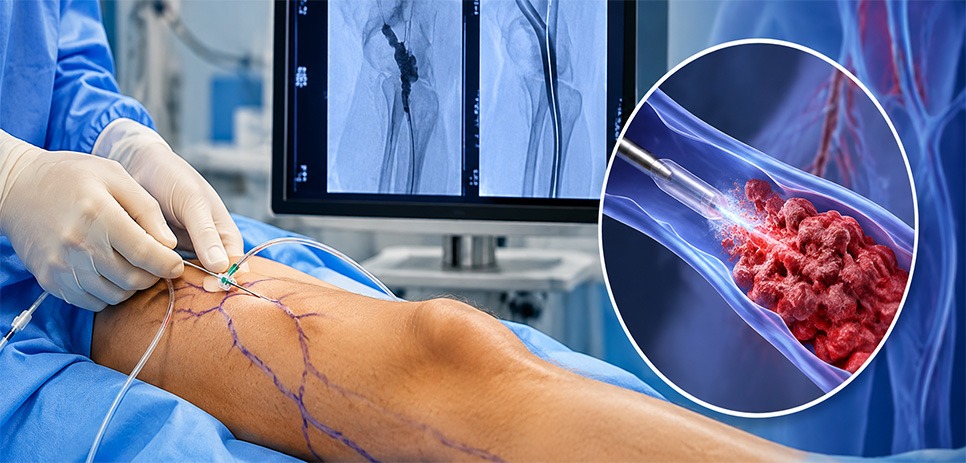
DVT thrombolysis involves delivering a clot-dissolving medicine directly into the affected vein through a thin catheter. Using image guidance, the catheter is positioned within the thrombus, allowing targeted treatment. In some cases, mechanical techniques or other endovascular methods may also be considered.
Unlike routine anticoagulation, which helps prevent clot growth and new clot formation, thrombolysis aims to actively break down an existing clot. However, it is not required for every patient with DVT and is generally reserved for carefully selected cases because thrombolytic treatment can increase the risk of bleeding.
When May DVT Thrombolysis Be Considered?
Catheter-directed thrombolysis may be considered in selected patients with extensive or symptomatic iliofemoral DVT, particularly when symptoms are recent, the risk of bleeding is low and there is a significant risk to the limb.
The treatment decision depends on factors such as:
- Location and extent of the blood clot
- Duration and severity of symptoms
- Overall health and functional status
- Risk of bleeding
- Imaging findings and clinical assessment
How Is DVT Thrombolysis Performed?
The procedure is performed under imaging guidance. A catheter is introduced through a small venous access point and guided to the clot. Thrombolytic medication is then delivered directly into the thrombosed vein. Patients are closely monitored during treatment, and follow-up imaging may be performed to assess clot clearance.
Personalised DVT Treatment
Every DVT is different. Dr. Avichala Taxak evaluates your symptoms, medical history and imaging to determine whether DVT thrombolysis or another treatment approach is appropriate for you. The goal is to provide precise, minimally invasive care while carefully considering potential benefits and risks.
If you have been diagnosed with DVT, specialist evaluation can help you understand your treatment options and the next steps.
Why Choose Expert Care?
Safe and effective DVT thrombolysis requires accurate diagnosis, careful assessment of clot location and bleeding risk, and experienced procedural care under imaging guidance. Modern catheter-based techniques can help specialists treat extensive clots with greater precision.
If you have symptoms suggestive of DVT or have been diagnosed with deep vein thrombosis, consult an experienced vascular or interventional radiology specialist to determine whether thrombolysis is appropriate for you.
Every patient needs an individual assessment.
DVT thrombolysis may be appropriate for some patients, while another treatment may be better for others. A detailed evaluation helps determine the most suitable approach for your condition.