Interventional Oncology
Tumour Embolization
Tumour Embolization is a minimally invasive interventional radiology procedure used to reduce or block the blood supply to certain tumours. By restricting blood flow to a tumour, embolization may help control tumour growth, reduce bleeding or prepare a tumour for another treatment such as surgery. The suitability of embolization depends on the tumour type, location, size and overall health of the patient.
What Is Tumour Embolization?
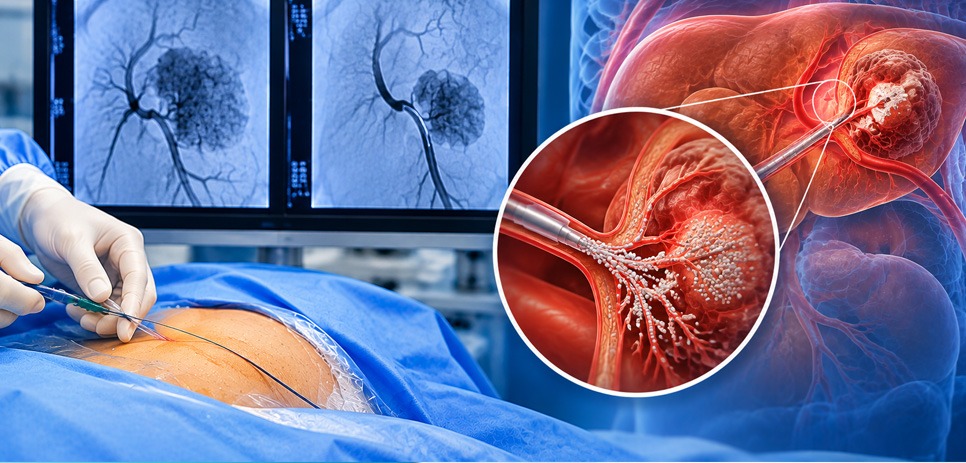
Many tumours require a blood supply to grow. During tumour embolization, an interventional radiologist uses imaging guidance to introduce a thin catheter into a blood vessel supplying the tumour. Small embolic materials are then delivered through the catheter to selectively reduce blood flow to the targeted area.
Depending on the clinical situation, embolization may be used as a standalone treatment or combined with other therapies.
When Is Tumour Embolization Used?
Tumour embolization may be considered for selected patients with certain liver, kidney, bone, pelvic or other vascular tumours. It may be performed to:
- Reduce blood flow to a tumour
- Control bleeding associated with a tumour
- Reduce tumour vascularity before surgery
- Support other cancer treatments
- Deliver treatment directly to selected tumours in specific procedures
For some liver tumours, embolization can also be combined with chemotherapy or radiation-based treatment as part of a multidisciplinary cancer treatment plan.
How Is Tumour Embolization Performed?
The procedure is usually performed under local anaesthesia and image guidance. A small catheter is inserted through a blood vessel, commonly in the groin or wrist, and carefully guided toward the arteries supplying the tumour.
After detailed imaging identifies the tumour's blood supply, the specialist delivers carefully selected embolic agents through the catheter. These materials reduce or block blood flow to the targeted tumour while aiming to preserve surrounding healthy tissue.
Benefits of Tumour Embolization
Tumour embolization is a minimally invasive treatment performed through a small vascular access point rather than a major surgical incision. It may help control bleeding, reduce tumour vascularity and support other cancer treatments in appropriately selected patients.
The potential benefits and risks vary according to the tumour and embolization technique used. Possible complications can include bleeding, infection, blood-vessel injury, contrast reactions and damage to surrounding tissues.
Personalised Interventional Oncology Care
Dr. Avichala Taxak provides specialised evaluation and minimally invasive interventional radiology treatments for selected tumour-related conditions. A detailed review of imaging, pathology, medical history and previous treatments helps determine whether tumour embolization is appropriate.
If you or a loved one has been diagnosed with a tumour, consult a specialist to understand available treatment options and whether embolization may form part of the treatment plan.
Why Choose Expert Care?
Safe and effective tumour embolization requires accurate diagnosis, detailed imaging-based planning, and experienced interventional technique. Modern embolization methods can help specialists target tumour blood supply with precision while aiming to preserve surrounding healthy tissue.
If you or a loved one has been diagnosed with a tumour, consult an experienced interventional radiologist and oncology team to determine whether tumour embolization or another treatment is appropriate for you.
Every patient needs an individual assessment.
Tumour embolization may be appropriate for some patients, while another treatment may be better for others. A detailed evaluation helps determine the most suitable approach for your condition.