Women's Health Treatments
Adenomyosis Embolization
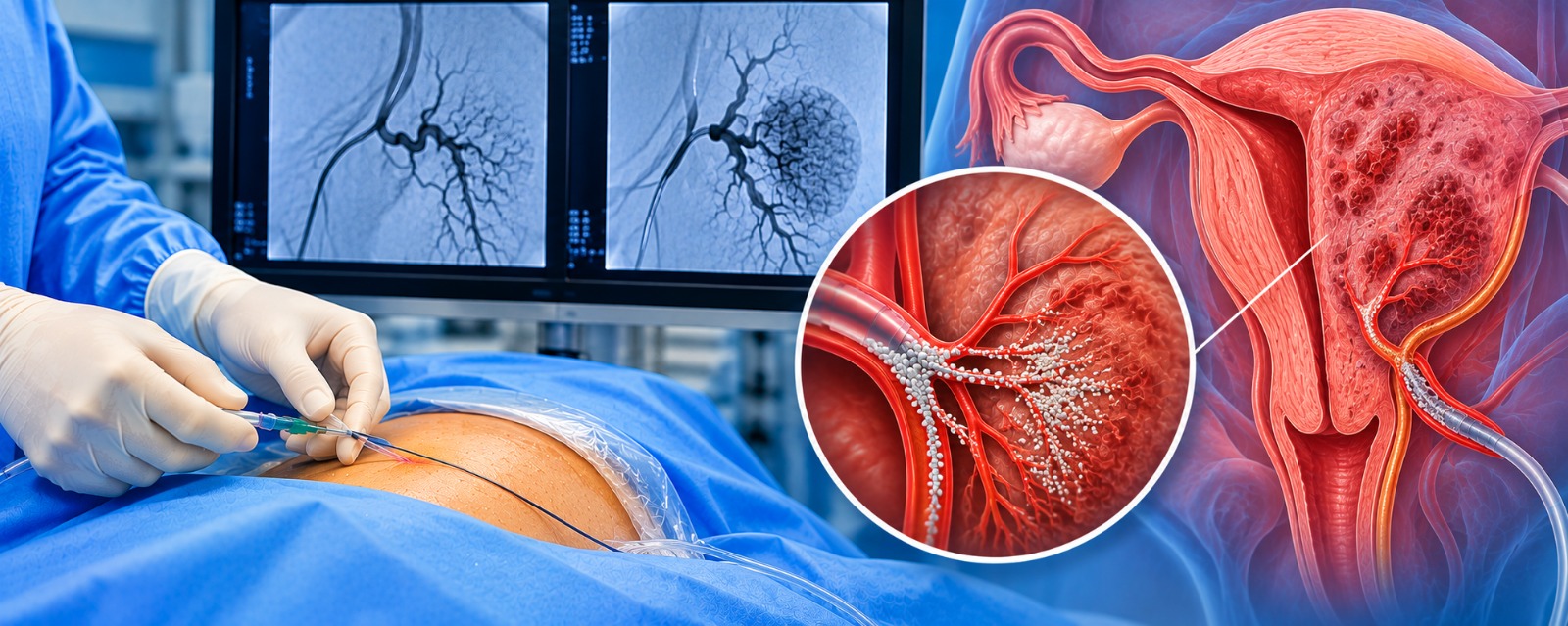
Adenomyosis Embolization, also known as Uterine Artery Embolization (UAE) for adenomyosis, is a minimally invasive treatment option for selected women with symptomatic adenomyosis. The procedure reduces blood flow to the affected uterine tissue and may help relieve symptoms such as heavy menstrual bleeding and painful periods. Recent evidence supports UAE as a treatment option for appropriately selected patients.
What Is Adenomyosis?
Adenomyosis is a benign condition in which tissue similar to the uterine lining grows into the muscular wall of the uterus. It can cause heavy or prolonged periods, severe menstrual cramps, chronic pelvic pain and an enlarged uterus, affecting everyday activities and quality of life.
What Is Adenomyosis Embolization?
During adenomyosis embolization, an interventional radiologist uses imaging guidance to introduce a thin catheter into the uterine arteries through a small vascular access point. Tiny embolic particles are then delivered into the arteries supplying the uterus.
The particles reduce blood flow to the abnormal adenomyotic tissue. Over time, this can reduce uterine volume and help improve symptoms.
Who May Benefit From Adenomyosis Embolization?
UAE may be considered for women with symptomatic adenomyosis when conservative treatment has not provided adequate relief or when a minimally invasive, uterus-preserving option is being considered. A detailed evaluation is important before treatment.
Common symptoms include:
- Heavy or prolonged menstrual bleeding
- Severe menstrual pain
- Chronic pelvic pain
- Pelvic pressure or discomfort
- Enlarged or bulky uterus
Ultrasound and MRI of the pelvis may be used to confirm the diagnosis, assess the extent of adenomyosis and assist with treatment planning.
Benefits of Adenomyosis Embolization
Adenomyosis embolization is performed through a small vascular access point and does not require removal of the uterus. Studies have reported improvement in heavy bleeding, menstrual pain and other adenomyosis-related symptoms following UAE in appropriately selected patients.
However, treatment outcomes can vary, and UAE may not be suitable for every patient. Women considering future pregnancy should discuss fertility and pregnancy-related considerations with their gynaecologist and interventional radiologist before treatment.
Personalised Adenomyosis Care
Dr. Avichala Taxak provides specialised evaluation and minimally invasive interventional treatment for women with symptomatic adenomyosis. A personalised assessment helps determine whether adenomyosis embolization or another treatment approach is appropriate.
If adenomyosis is affecting your quality of life, consult a specialist to understand your treatment options.
Why Choose Expert Care?
Safe and effective adenomyosis embolization requires accurate diagnosis, detailed imaging-based planning, and experienced interventional technique. Modern embolization methods can help specialists treat symptomatic adenomyosis with precision while preserving the uterus.
If you have symptoms suggestive of adenomyosis or have been diagnosed with the condition, consult an experienced interventional radiologist and gynaecologist to determine whether adenomyosis embolization or another treatment is appropriate for you.
Every patient needs an individual assessment.
Adenomyosis embolization may be appropriate for some patients, while another treatment may be better for others. A detailed evaluation helps determine the most suitable approach for your condition.