Vascular & Endovascular Treatment
Carotid Artery Stenting
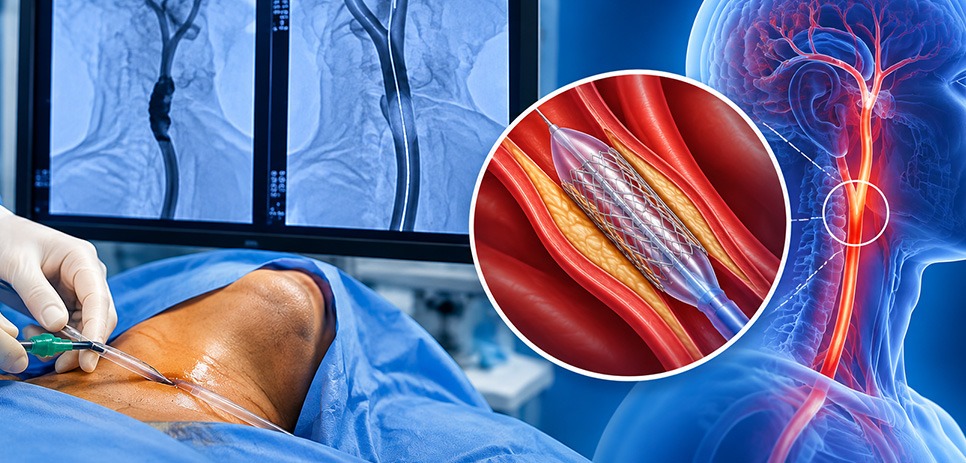
Carotid Artery Stenting is a minimally invasive procedure used to treat significant narrowing of the carotid arteries, which supply blood to the brain. Carotid artery narrowing, known as carotid stenosis, is commonly caused by plaque buildup and can increase the risk of transient ischaemic attack (TIA) or stroke.
What Is Carotid Artery Stenting?
Carotid artery stenting involves guiding a thin catheter through a blood vessel to the narrowed carotid artery. A balloon may be used to widen the narrowed area, followed by placement of a small metal mesh tube called a stent. The stent helps keep the artery open and supports improved blood flow to the brain.
A cerebral protection device may also be used during the procedure to help reduce the possibility of plaque or debris travelling toward the brain.
When Is Carotid Stenting Recommended?
Carotid artery stenting may be considered for selected patients with significant carotid artery stenosis, particularly when revascularisation is appropriate and surgery may not be suitable. The decision depends on the degree of narrowing, symptoms, medical history, anatomy and overall procedural risk.
Common evaluation may include:
- Carotid Doppler ultrasound
- CT angiography (CTA)
- MR angiography (MRA)
- Clinical assessment of stroke or TIA symptoms
How Is the Procedure Performed?
Carotid stenting is generally performed using image guidance and local anaesthesia, with a catheter introduced through a small vascular access point. The catheter is carefully advanced to the carotid artery, where angioplasty and stent placement can be performed when indicated.
Benefits and Risks
Carotid artery stenting is less invasive than open surgery and may provide an alternative treatment for appropriately selected patients. However, like any vascular procedure, it carries potential risks, including bleeding, vessel injury, TIA or stroke, contrast reactions and other complications.
Expert Carotid Artery Care
Dr. Avichala Taxak provides specialised evaluation and minimally invasive vascular care for patients with carotid artery disease. A detailed assessment helps determine whether carotid artery stenting, medical management or another treatment approach is appropriate.
If you have been diagnosed with carotid artery stenosis or have experienced TIA or stroke symptoms, timely specialist evaluation is important.
Why Choose Expert Care?
Safe and effective carotid artery stenting requires accurate diagnosis, detailed imaging-based planning, and experienced endovascular technique. Modern stent systems and cerebral protection devices can help specialists treat significant carotid narrowing with greater precision.
If you have been diagnosed with carotid artery disease or have symptoms suggestive of TIA or stroke, consult an experienced vascular or interventional specialist to determine whether carotid stenting is appropriate for you.
Every patient needs an individual assessment.
Carotid artery stenting may be appropriate for some patients, while another treatment may be better for others. A detailed evaluation helps determine the most suitable approach for your condition.